
Jordan’s history and landscapes draw visitors from around the world, but its hospitality often leaves an equally lasting impression. A greeting from a shopkeeper, an invitation to share coffee or a conversation over a meal can become a memorable part of your journey.
Understanding a few local customs helps you feel more comfortable and connect respectfully with the people you meet. Traditions vary between families, communities and settings, so follow your host’s lead rather than assuming everyone observes the same customs.
Whether you are exploring Amman, visiting Petra, staying in Wadi Rum or enjoying Aqaba, these practical tips will help you prepare.
Greetings and Shaking Hands
A friendly “Marhaba”, meaning hello, is a good way to begin a conversation.
Handshakes are common in many situations, but some people prefer not to shake hands with someone of another gender for religious or personal reasons. Let the other person initiate if you are unsure.
If a handshake is not offered, a smile, a verbal greeting or placing your hand over your chest is a respectful alternative. Avoid making assumptions based on someone’s clothing.
Standing to welcome someone, particularly an older person or a guest, is also a thoughtful gesture when practical.
Understanding Warm Greetings
Friends and relatives may greet each other with cheek kisses. The form of greeting depends on familiarity, gender and personal preference.
Visitors are not expected to initiate this. A warm verbal greeting is enough, and you can follow the other person’s lead while maintaining your own comfort.
Arabic Coffee and Hospitality
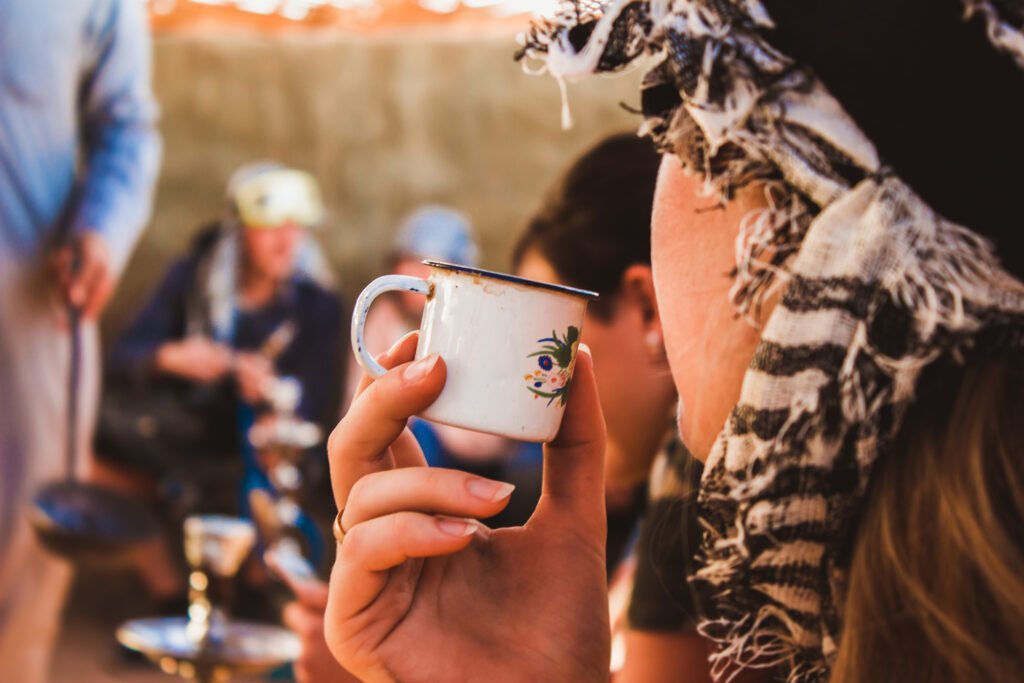
Arabic coffee holds a special place in Jordanian hospitality, particularly in Bedouin traditions. Being offered a small cup is often a gesture of welcome.
When coffee is served in this traditional setting:
Holding out your empty cup can indicate that you would like another serving.
Gently shaking the cup from side to side signals that you have finished and do not want a refill.
Accepting coffee can be a pleasant way to share the moment, but you may politely decline if you do not drink it. A smile and “La, shukran”, meaning “No, thank you,” expresses appreciation.
Sharing Meals with Hosts
Food is an important expression of hospitality in Jordan. Hosts may offer generous portions or encourage you to have another helping.
Show your appreciation, enjoy what you comfortably can and thank your host. You do not need to overeat to be polite.
If you have allergies, dietary requirements or foods you avoid, explain them clearly before the meal. When eating from a shared dish, observe how your hosts serve themselves and follow their guidance.
A simple “Shukran” is always useful. You might also hear “Sahtein,” a friendly expression wishing someone enjoyment of their food.
Dressing Respectfully
Clothing expectations vary by location. Resort areas, city neighbourhoods, rural communities and religious sites can have different norms.
For everyday sightseeing, clothing that covers the shoulders and knees is a considerate choice for both men and women. Loose, lightweight garments can also be comfortable in warm weather.
At mosques and other religious sites, follow the specific visitor requirements. Women may be asked to cover their hair, and visitors may need to remove their shoes.
Swimwear is appropriate at designated beaches and pools; change or cover up before entering shops, streets or shared indoor spaces.
Respecting Prayer and Religious Spaces
When someone is praying, give them space. Avoid interrupting, photographing them without permission or walking directly between them and the direction of prayer.
Before entering a religious building, check whether visitors are welcome at that time. Keep your voice low and follow instructions about dress, footwear and photography.
If you are unsure, ask your guide or a member of staff.
Visiting During Ramadan
Ramadan is a month of fasting, worship and gathering for many Muslims. Daily routines, opening hours and meal arrangements may differ during this period.
Be considerate by avoiding eating, drinking or smoking openly in public during fasting hours. Ask your accommodation or guide about suitable places for daytime meals.
Around sunset, allow flexibility in your plans as people prepare to break their fast. If invited to an iftar meal, follow your host’s lead and enjoy the opportunity to share the occasion.
Tipping for Good Service
Tipping is generally discretionary and can be a way to show appreciation for helpful service.
Check restaurant and café bills for service charges before deciding whether to leave an additional amount. For guides and drivers, consider the length of the service, group size and your experience.
Keep some small Jordanian dinar notes available, and avoid feeling pressured to tip for a service you did not request.
Bargaining in Markets
Friendly bargaining may be appropriate in some markets and souvenir shops, but it is not expected everywhere.
Supermarkets, restaurants and many established retailers use fixed prices. In places where negotiation is welcome, keep the conversation polite and agree on the final price before buying.
You can decline an offer and walk away courteously. The aim is a price both you and the seller are comfortable with.
Asking Before Taking Photographs
Jordan offers wonderful opportunities for photography, but people’s privacy deserves the same consideration as anywhere else.
Ask permission before photographing individuals, particularly children. Respect a refusal without insisting.
Follow photography restrictions at religious sites, museums and other locations, and avoid photographing military or security facilities.
Small Arabic Expressions Make a Difference
You do not need fluent Arabic to make a friendly connection. A few words can help:
| English | Arabic | Simple pronunciation |
|---|---|---|
| Hello | مرحبا | Marhaba |
| Thank you | شكراً | Shukran |
| No, thank you | لا، شكراً | La, shukran |
| Welcome | أهلاً وسهلاً | Ahlan wa sahlan |
| Goodbye | مع السلامة | Ma’a s-salaameh |
Speak naturally, smile and do not worry about perfect pronunciation.
Experience Jordan Through Local Connections
Respectful travel begins with curiosity and consideration. Ask questions, listen to your hosts and remember that customs are personal as well as cultural.
Excursions Jordan brings together activities from local providers across the country. From cultural visits in Amman and historic discoveries in Petra to desert experiences in Wadi Rum and coastal outings in Aqaba, local knowledge can add depth to your journey.
Browse each experience’s details to find the activities, guiding arrangements and inclusions that suit you.
Discover tours, activities and local experiences with Excursions Jordan