
Find Authentic Experiences Follow Your Curiosity, Feel The Joy Of Real Discoveries, And Explore More Of The World.
Top Bedouin Experiences In Jordan... Let's see it!
The term "Bedouin" derives from Arabic meaning "desert dwellers." Approximately 4 million Bedouins exist as nomadic peoples who have inhabited deserts for millennia. Western tourists increasingly find their culture and customs fascinating, and Bedouin communities willingly share traditions with visitors. Visiting nearby Bedouin settlements offers the most authentic experience, where guests participate in traditional meals and customs. Many tours employ local Bedouin guides, such as those on Wadi Rum Jeep Safari excursions.
Top Bedouin Experiences In Jordan
Nearly 30 percent of Jordan's population comprises semi-nomadic tribes, making Bedouin culture central to national heritage. Optimal methods for engaging with this heritage include camping at Bedouin camps or riding camels through desert dunes.
For thousands of years, Bedouin tribes inhabited the Arabian Peninsula, herding livestock across deserts between Arabia and the Levant. They represent fundamental elements of Arabian society throughout recorded history. These nomadic peoples moved seasonally seeking water, pastures, and shelter while practicing animal husbandry. Most spent summers in eastern deserts and winters in the milder Jordan Valley.
Jordanian Bedouins resemble those in southern Palestinian deserts, Sinai, Arabia, and Africa's Sahara regions. While diets vary by vegetation, lifestyle aspects, language, customs, clothing, animal husbandry, largely remain consistent. However, modernity has significantly influenced Jordanian Bedouin culture over generations.
Top Bedouin Experiences In Jordan & Hospitality
Bedouin hospitality represents one of the Middle East's finest aspects. These desert dwellers demonstrate exceptional kindness and adaptability to harsh environments. Though originating in desert regions, Bedouins now inhabit Wadi Rum, Syrian deserts, Egypt's Sinai, and Sahara regions. Jordan currently hosts approximately 4 million Bedouins.
While not all live nomadically, desert-dwelling Bedouins maintain traditional lifestyles with sheep, goats, and camels, residing in tents and welcoming guests for cultural engagement and authentic hospitality experiences.
How we recognized Bedouins
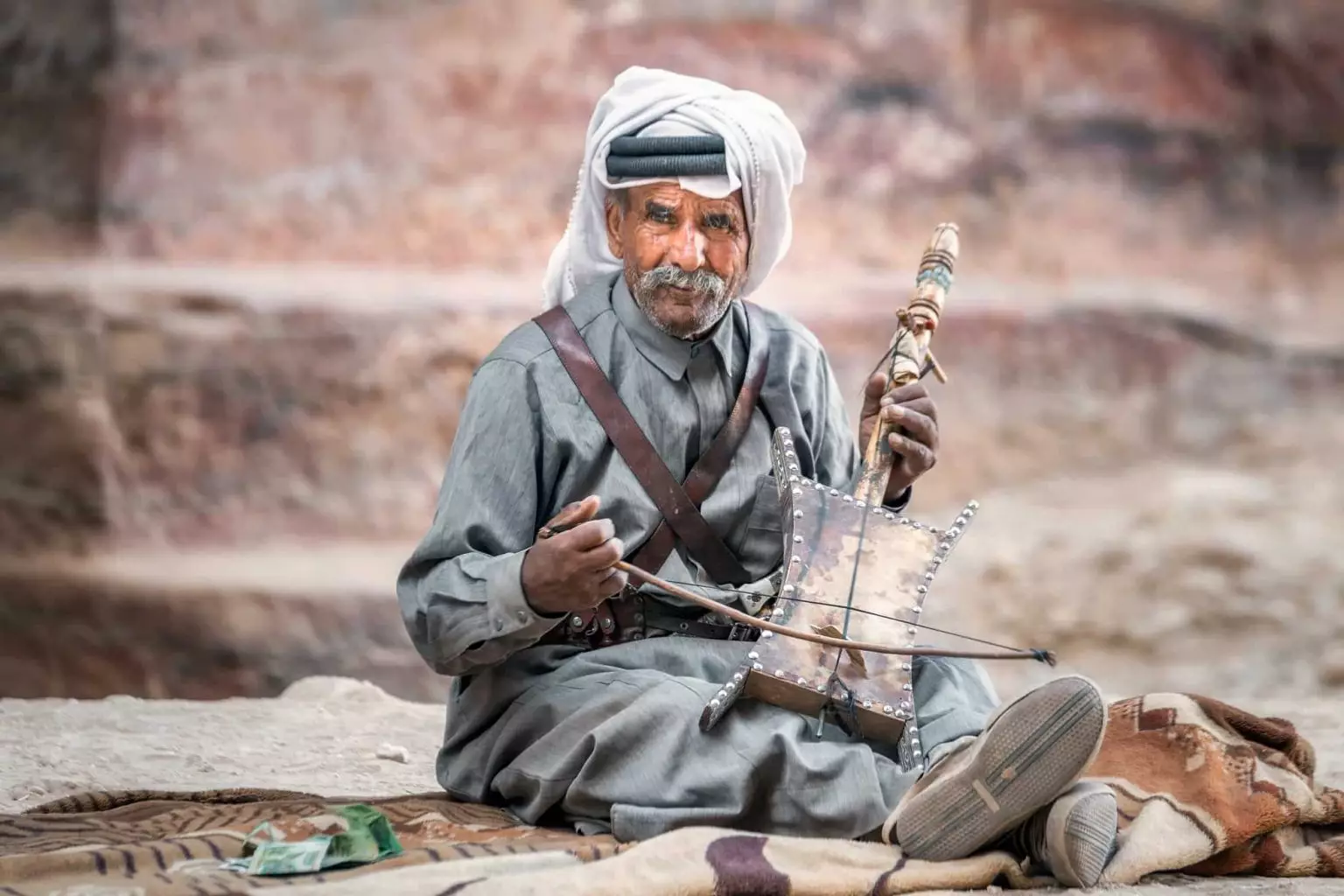
Traditional attire readily identifies Bedouins. Males typically wear long, sleeveless garments covering to the knees, often white but sometimes other colors. Over this, they wear a "koufeyah", a draped head covering, typically red and white, secured with black rope or cord.
Bedouin women traditionally wear long dresses called "madragas," usually black fabric. The "usaba" represents the required female head covering.
Jordanian Bedouins are humble people carrying only survival essentials, coexisting peacefully with nature. Their culture emphasizes welcoming all visitors, explaining their renowned hospitality. Jordanian Bedouin families gladly provide food and shelter, sharing possessions without hesitation. Hosting constitutes an honor, with strong emphasis on meal-sharing and coffee rituals.
A vacation to Jordan's Bedouin Campsites
Six Bedouin tribes inhabit Wadi Rum, a protected desert reserve. Authentic campgrounds showcase Bedouin customs through meals, coffee, and starlit nights, offering genuine cultural experiences.
Six locations to directly engage with Top Bedouin Experiences In Jordan
Firstly, Wadi Rum
Over 12,000 years of human existence appear in Wadi Rum's petroglyphs. The Zalabieh Bedouin currently maintain this site.
Following hiking, rock climbing, and scenery appreciation, Zalabieh guides transport visitors deep into the desert for traditional tent stays and steaming tea beside brushwood bonfires.
Secondly, Tracey
Petra, a rock-cut city and archaeological treasure, houses the Bdul Bedouin. World Heritage listing in the 1980s forced them from semi-nomadic lifestyles. Today, most work in tourism, offering horse-and-camel tours and tent cafes. Conversations with local Bdul reveal complexities in balancing community needs with historical preservation and promotion.
Thirdly, Biosphere Reserve Dana
Dana Biosphere Reserve's verdant, wildlife-rich escarpments rank among Jordan's premier hiking destinations and serve as Bedouin community tourism hubs.
The Dana Cooperative, comprising approximately 100 Ata'ta Bedouin households, manages nearby Dana Hotel and Wadi Dana Lodge. It offers shepherding opportunities, allowing visitors to follow grazing herds while learning pastoralist traditions.
Fourthly, Feynan Eco Lodge
The off-grid Feynan Ecolodge exemplifies collaborative tourism development with local communities in western Dana Biosphere Reserve.
Staff from nearby Bedouin towns Rashaydeh and Azazmeh demonstrate sand-oven bread-making, guide hikes, and share Bedouin astronomy stories during stargazing.
Fifthly, The Weaving Center of Bani Hamida
Bedouin-produced goods demonstrate herding's importance to their lifestyle. Hand-woven rugs offer portable alternatives to large wool-and-hair tents.
The Bani Hamida Weaving Center on the King's Highway displays traditional and contemporary Bedouin designs. This women-operated cooperative prices items fairly, appropriately compensating craftspeople for time and skill.
Sixthly, Amman
Urban dining venues provide authentic Bedouin cultural experiences. Mansaf, Jordan's national dish, originated from Bedouin cuisine. This slow-cooked lamb with rice, served heaped with goat-milk yogurt and pine nuts, represents occasions celebrated among friends practicing Bedouin hospitality traditions, continuously adding meat portions until satisfied.
How Joran's Bedaouins' lives have changed
Not all Bedouin tribes remain nomadic; only approximately 2 percent continue this lifestyle. Over the past century, modern amenities like electricity and hot water encouraged contemporary living. Current decisions center on convenience and choice.
A substantial Jordan Bedouin population maintains hybrid lifestyles, occupying permanent homes during spring-summer grazing seasons while retaining traditional desert tents. Many continue animal husbandry while maintaining secondary tourism employment. Tourist-heavy areas like Wadi Rum and Petra feature full-time Bedouin workers.
Where do Bedouin people reside and who are they?
Significant Bedouin populations inhabit the Middle East and North Africa. They share Arab linguistic and cultural identity.
What is the origin of the Bedouin population?
The Arabian Peninsula birthed the Bedouin people, who subsequently migrated throughout the Middle East and North Africa.
What is the reputation of Bedouin people?
Traditional pastoralist nomadic lifestyles define Bedouin recognition, though contemporary Bedouins predominantly live in urban or agricultural settings.