
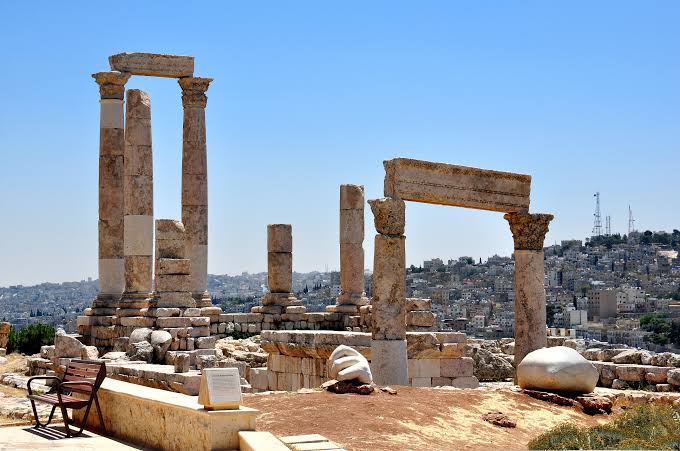
Standing above downtown Amman, the Roman Temple of Hercules is one of Jordan’s most recognizable ancient landmarks. Its towering columns frame views across the capital, bringing together two compelling reasons to visit: Roman archaeology and the hilltop setting of the Amman Citadel.
Whether you are spending one day in Amman or beginning a longer journey through Jordan, the temple makes a rewarding introduction to the country’s heritage. Combine your visit with the Citadel’s other monuments, the Roman Theatre, and the streets of downtown for a day of history and local culture.
Explore Excursions Jordan to discover experiences that help you build your Amman itinerary.
Where Is the Temple of Hercules?
The Temple of Hercules is located within the Amman Citadel, known locally as Jabal al-Qal’a, on a hill overlooking central Amman.
The Citadel is an archaeological site containing remains from several historical periods. Alongside the Roman temple, visitors can explore the Byzantine Church, the Umayyad Palace complex, and other monuments that reveal how this hilltop changed over time. Department of Antiquities
Its central location makes the Citadel a convenient starting point for sightseeing, although reaching the entrance involves an uphill journey.
History of the Roman Temple of Hercules
Dating to the Roman period, the temple was a monumental building in ancient Amman. Today, surviving architectural remains and partially restored columns help visitors imagine its original scale.
Although widely known as the Temple of Hercules, archaeologists also refer to it as the Great Temple of Amman. Its identification with Hercules should be treated with some caution rather than presented as an undisputed dedication.
Excavation and partial restoration undertaken by the American Center of Research and Jordan’s Department of Antiquities have helped preserve and interpret the monument. Acor Jordan
For visitors, this archaeological uncertainty adds another layer of interest: the temple is both a striking landmark and a place where researchers continue to examine the evidence behind its story.
What to See at the Temple of Hercules
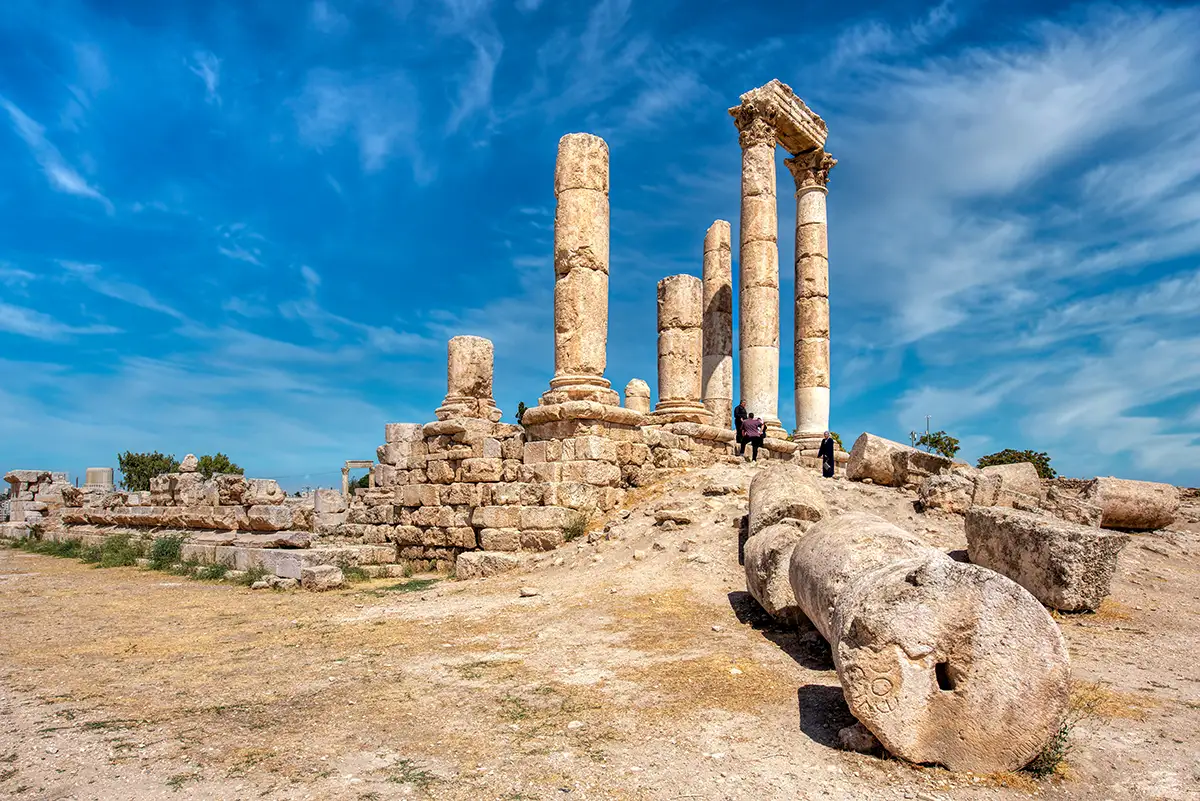
The Standing Columns
The temple’s columns are its most distinctive feature. Seen against the sky, they give a sense of the scale and ambition of Roman monumental architecture.
Walk around the designated visitor areas to appreciate different perspectives. Looking toward the city, the ancient stonework contrasts with Amman’s densely built hillsides.
The Colossal Marble Hand
Near the temple, look for fragments of a colossal marble statue, including a hand and elbow. These remains are thought to belong to a statue of Hercules, although the identification and reconstruction are interpretations of the surviving evidence. Acor Jordan
The fragments offer a memorable way to appreciate the monument’s scale. Even a small surviving part suggests how imposing the complete figure might once have been.
Views Across Amman
Allow time to enjoy the Citadel’s outlook over the capital. Buildings spread across the surrounding slopes, while the streets below connect the ancient hilltop with the modern city.
For photographers, the combination of columns, stone ruins, and urban scenery offers several compositions without needing to leave the archaeological site.
What Else Can You Visit at Amman Citadel?
The Temple of Hercules is part of a broader visit. Leave time for these nearby highlights:
- Umayyad Palace complex: Explore remains that introduce another important period in the Citadel’s history.
- Byzantine Church: See evidence of the hilltop’s Christian heritage.
- Jordan Archaeological Museum: Visit the on-site museum for archaeological context, subject to its opening arrangements.
Jordan’s tourism authorities identify the temple, palace, and Byzantine Church among the Citadel’s principal attractions. Citadel, Rainbow Street & Local Culture
How to Get to Amman Citadel
By Taxi or Arranged Transfer
A taxi or arranged transfer is a practical choice for reaching the hilltop entrance, particularly in hot weather or when traveling with children.
Confirm your destination as the Amman Citadel entrance, rather than simply downtown Amman.
On Foot
Walking can suit visitors who enjoy exploring the city, but expect uphill streets, steps, and uneven surfaces. Wear comfortable shoes and allow more time than the short map distance might suggest.
With a Guided Experience
A guide can help explain how the temple relates to the Citadel’s other monuments and the wider history of Amman.
Browse tours and cultural experiences on Excursions Jordan, checking each listing for its itinerary, pickup arrangements, entrance fees, and guiding inclusions.
How Much Time Should You Allow?
As a planning suggestion, allow one and a half to two hours for Amman Citadel, with longer if you enjoy photography, archaeology, or a detailed guided visit.
The temple itself takes less time, but rushing directly to the columns means missing much of the setting that makes the visit worthwhile.
For a fuller day, combine the Citadel with the Roman Theatre, lunch downtown, and an afternoon café stop.
When Is the Best Time to Visit?
Choose your visiting time according to the weather and the site’s confirmed opening hours.
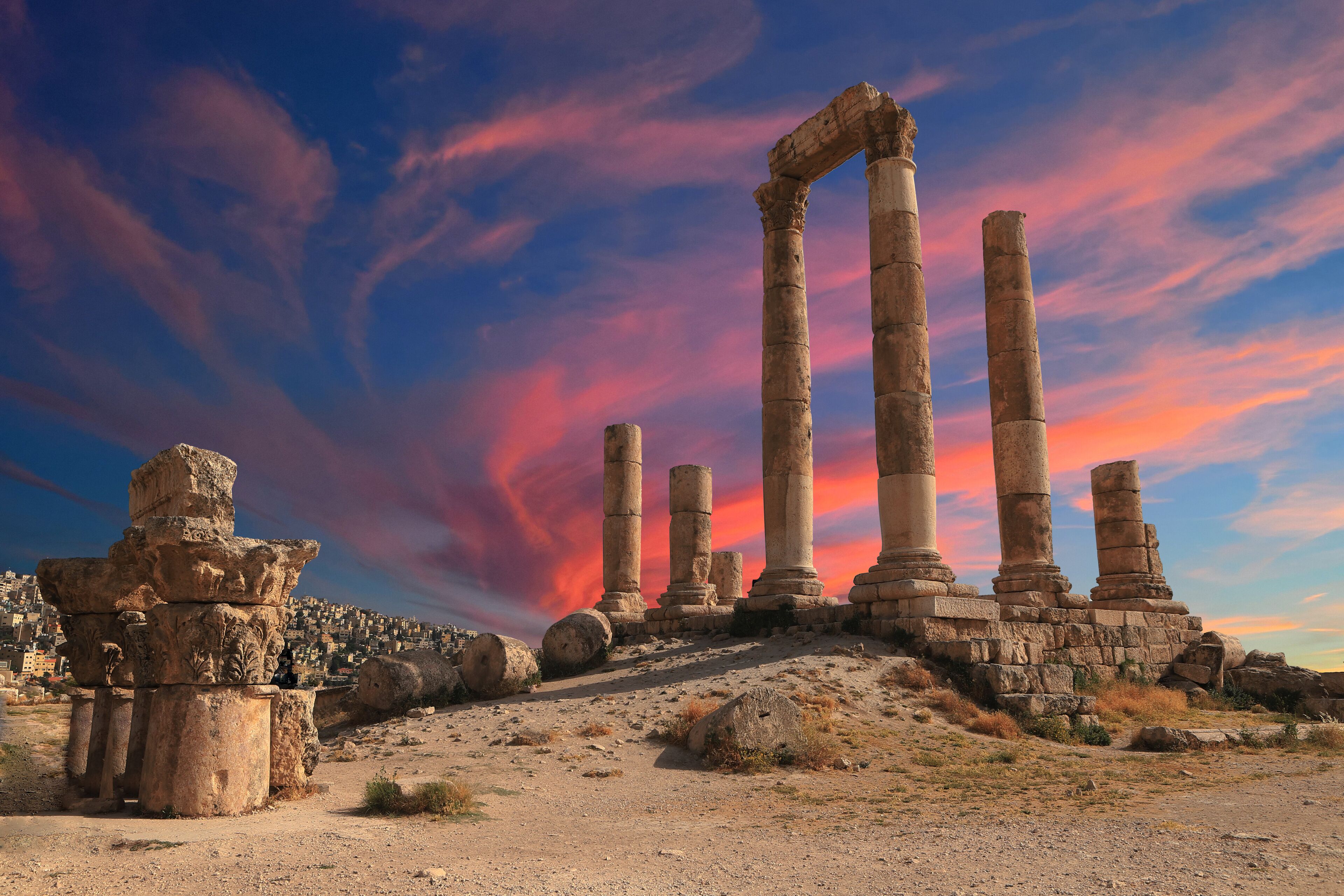
In warmer months, an earlier visit can make walking around the exposed hilltop more comfortable. Later light can be appealing for photography, provided you leave enough time before closing.
Bring water, sun protection, and a layer for cooler or windy conditions. Opening hours and admission arrangements can change, so check them close to your visit rather than relying on an old timetable.
Combine the Temple with More Things to Do in Amman
Visit the Roman Theatre
Continue your exploration of Roman Amman with the theatre downtown. Seeing both landmarks helps turn a single monument visit into a broader introduction to the ancient city.
Explore Downtown Amman
Make time for traditional shops, bakeries, and casual restaurants. A lunch of falafel, hummus, and fresh bread provides a relaxed break between archaeological stops.
Enjoy Rainbow Street or Jabal Al-Weibdeh
Finish your day with a neighborhood walk and a café visit. These areas offer a different perspective on Amman beyond its ancient monuments.
Frequently Asked Questions
Is the Temple of Hercules inside Amman Citadel?
Yes. The temple is one of the main archaeological monuments within the Citadel.
Is it a separate attraction from the Roman Theatre?
Yes. The Temple of Hercules stands on the Citadel hill, while the Roman Theatre is downtown. Plan time to travel between them.
Do I need a guide?
You can explore independently, but a knowledgeable guide can add context to the ruins and explain the different historical periods represented at the Citadel.
Can I visit with children?
Yes, with suitable supervision around uneven ground, steps, and archaeological remains. Adapt the length of your visit to the weather and your children’s energy.
What should I wear?
Comfortable walking shoes, weather-appropriate clothing, and sun protection are useful. Stay on permitted paths and avoid climbing on ancient structures.
Discover Amman’s History with Excursions Jordan
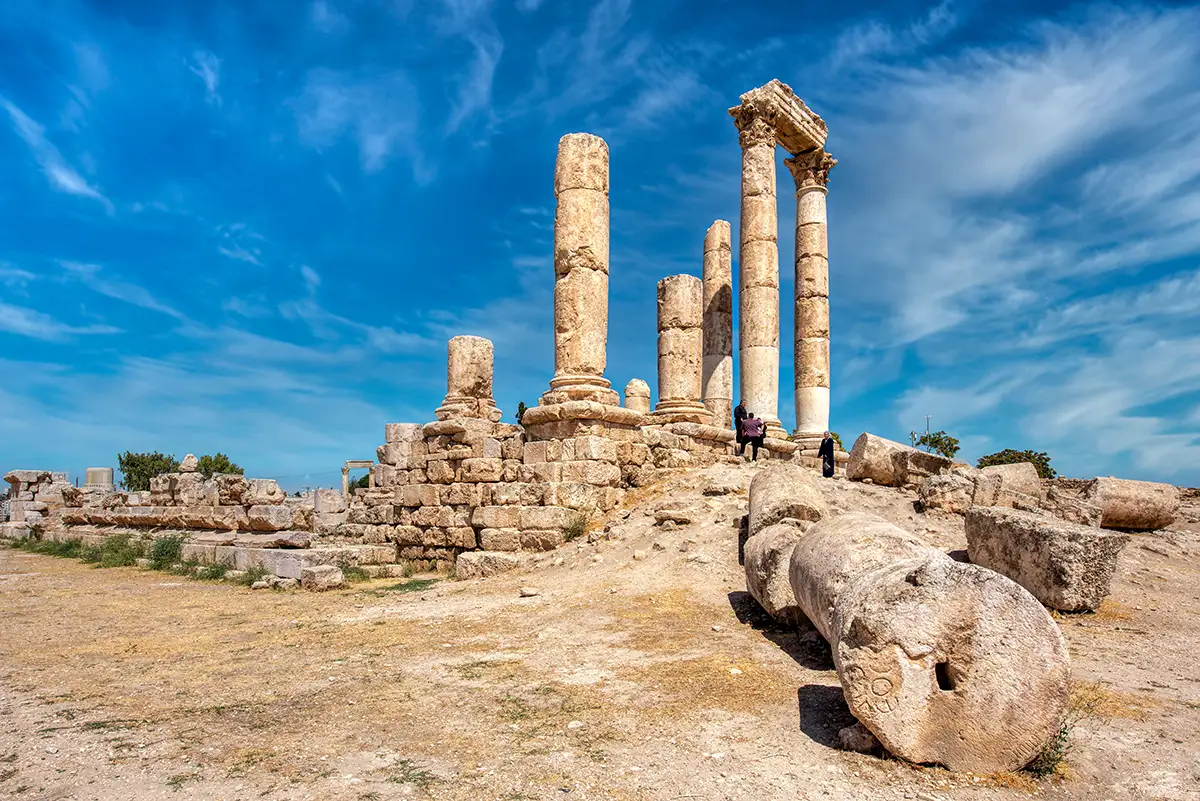
The Temple of Hercules at Amman Citadel brings together monumental Roman remains, archaeological questions, and sweeping city views. It is a rewarding stop for anyone interested in Amman’s history, especially when combined with the Citadel’s palace and church, the Roman Theatre, and time downtown.
Explore Excursions Jordan’s activities and experiences to plan your next discovery in Amman and beyond.