

Jordanian traditions come to life through everyday encounters: coffee offered to a guest, a meal shared with family, music at a celebration or knowledge passed between generations.
Understanding these customs can add depth to your visit. Beyond exploring Petra, Wadi Rum and Amman, take time to listen to the people you meet and discover how heritage connects with contemporary life.
Jordanian society is diverse. Traditions differ between families, communities and settings, so approach this guide as an introduction rather than a rulebook for everyone.
Discover opportunities to connect with local culture through Excursions Jordan.
Hospitality: Making Guests Feel Welcome
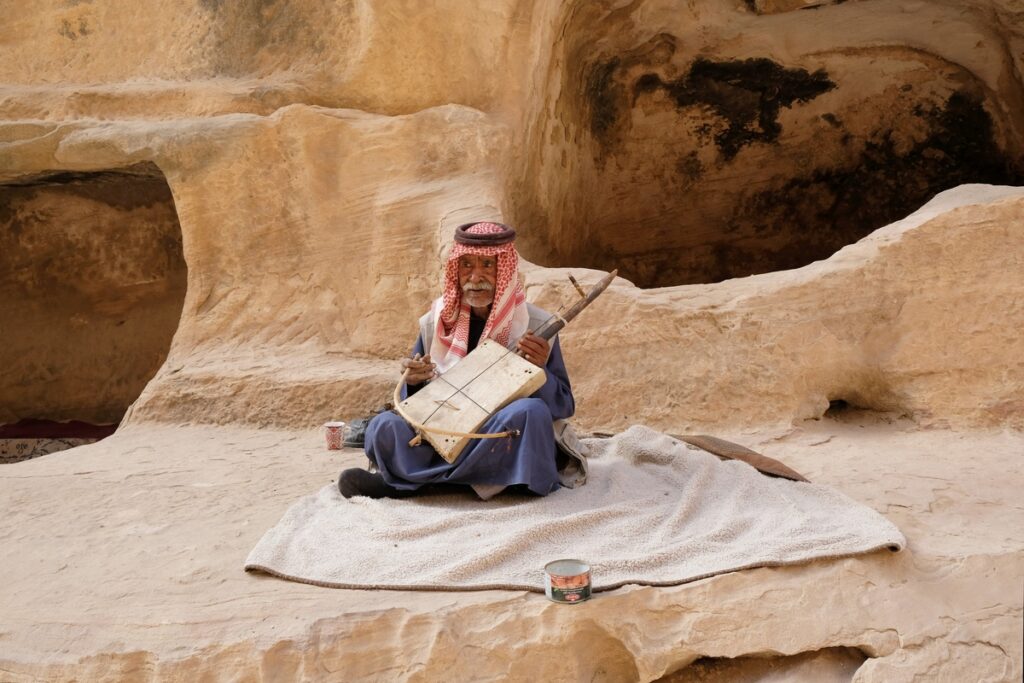
Hospitality is an important part of social life in Jordan. Visitors may encounter it through a warm greeting, an invitation to sit or an offer of tea and coffee.
A host may offer refreshments more than once as an expression of generosity. Show appreciation, but do not feel obliged to accept everything or stay longer than you comfortably can.
Simple expressions help:
| Expression | Meaning |
|---|---|
| Marhaba | Hello |
| Ahlan wa sahlan | Welcome |
| Shukran | Thank you |
| La, shukran | No, thank you |
| Ma’a s-salaameh | Goodbye |
If invited into a home, follow your host’s lead about seating and removing shoes. Ask before photographing people or private spaces.
Arabic Coffee and Tea
Coffee and tea often create space for conversation, whether in a home, a shop or a desert camp.
Traditional Arabic coffee may be served in small cups, sometimes flavoured with cardamom. In this style of service, gently shaking the cup from side to side commonly signals that you have finished, while holding it out can indicate that you would like more.
Tea is another familiar gesture of welcome, with preparation and flavourings varying between hosts.
You can politely decline either drink. The exchange is about hospitality and appreciation, not an obligation to consume something you do not want.
Family and Social Connections
Family relationships play an important role in many Jordanians’ lives. Visits, meals and celebrations provide occasions for relatives and friends to gather and maintain connections.
Greetings may take time, with conversation before moving to the practical purpose of a meeting. A relaxed, attentive approach can make these encounters more enjoyable.
Respect for older people is also valued in many settings. Standing to welcome someone or offering a seat can be thoughtful gestures.
Personal preferences vary, however. Let people introduce their own relationships and customs rather than making assumptions.
Bedouin Heritage in Jordan
Bedouin heritage is an important part of Jordan’s cultural identity, with traditions connected to pastoral life, desert knowledge, hospitality, poetry and oral history.
Today, Bedouin communities have varied ways of life. Many people live in permanent homes and work in tourism, public service, business and other professions while maintaining connections with family and heritage.
A visit should therefore make room for contemporary life as well as longstanding traditions.
Experiencing Bedouin Hospitality
Locally hosted experiences may offer opportunities to share tea, learn about the landscape, enjoy a meal or hear stories. What is shared depends on the host and the activity.
When choosing a desert stay or cultural visit, ask who operates it, how local people participate and what the experience includes. A particular tent style alone does not establish its cultural value.
Browse desert adventures and local experiences in Jordan
Religion and Everyday Life
Islam is the majority religion in Jordan, and the country also has longstanding Christian communities and people of other faiths.
Mosques, churches and religious occasions form part of the country’s cultural landscape. Visitors can appreciate this heritage while respecting the privacy of worshippers.
Before entering a religious building, check visiting arrangements, clothing requirements and photography rules. Avoid interrupting prayer or treating an active place of worship solely as a sightseeing stop.
Ramadan and Religious Holidays
During Ramadan, Muslims who observe the fast abstain from food and drink from dawn until sunset. Prayer, generosity and gathering with family and community are central to the month.
Opening hours and meal arrangements may change, while evenings can become lively after iftar, the meal that breaks the daily fast.
Eid al-Fitr marks the end of Ramadan, while Eid al-Adha is associated with sacrifice, sharing and charitable giving. Christian celebrations, including Christmas and Easter, also form part of Jordan’s religious life.
Islamic observances follow the lunar calendar, so their Gregorian dates change each year. The Islamic New Year falls on the first day of Muharram; it is not tied to January.
Confirm holiday dates and visitor arrangements for your actual travel year.
Food Traditions and Shared Meals
Food is one of the most enjoyable ways to discover Jordanian culture. Recipes reflect local ingredients, family practices and connections across the wider region.
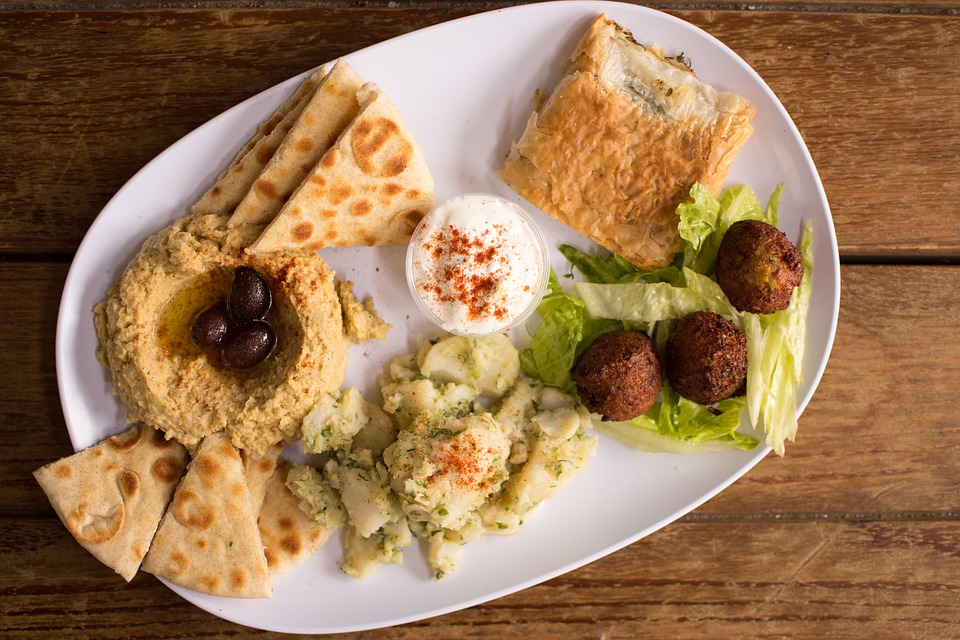
A shared table might include hummus, labneh, olives, bread, salads and other hot or cold dishes. Mezze can form a meal itself or accompany further courses.
Mansaf
Mansaf is closely associated with Jordanian hospitality and celebration. It commonly combines meat, rice and a sauce made with jameed, a dried fermented yoghurt.
Preparation and presentation vary, and your host can explain how the dish is served in their household.
Bread, Zarb and Sweets
Bread accompanies many everyday meals. At some desert camps, you may encounter zarb, prepared in an underground oven.
Sweet shops offer treats such as knafeh and baklava, while homes and businesses may serve something sweet alongside coffee or tea.
Eating with Consideration
Follow your host’s lead when sharing dishes. Using the right hand is customary in some traditional settings, particularly when eating directly by hand; this is an etiquette practice, not a matter of bad luck.
Cutlery is also widely used. You can ask for it, explain dietary requirements and politely decline additional food.
Meal times vary between households, work schedules and seasons, so avoid relying on a fixed national timetable.
Music, Dabke and Celebrations
Music, singing and poetry provide ways to share stories and celebrate occasions.
Dabke, a group dance also practised elsewhere in the Levant, is associated with weddings and other celebrations. Participants often dance in a line or semicircle, following a shared rhythm.
If invited to join, follow the group’s guidance and enjoy learning. Ask permission before filming, particularly at private family events.
Cultural festivals can offer opportunities to encounter performance and artistic expression. Check confirmed programmes rather than assuming dates or activities remain the same every year.
Traditional Crafts and Local Knowledge
Craft traditions offer another perspective on Jordan’s communities. Depending on the destination, you may encounter weaving, embroidery, pottery, mosaics or other locally made work.
Ask makers about materials, techniques and the story behind an item. A workshop can provide more insight than a quick shopping stop, particularly when participants have time to ask questions.
When buying, distinguish locally produced crafts from mass-produced souvenirs if supporting local makers is your goal.
Clothing and Personal Greetings
Clothing styles vary throughout Jordan. For many public settings, comfortable garments covering the shoulders and knees are a considerate choice.
Women do not generally need to cover or tie back their hair in public. Mosques and individual religious sites may have specific requirements, including a head covering.
Handshakes are common, but some people prefer not to shake hands with someone of another gender. If unsure, wait for the other person to initiate. A smile and verbal greeting are suitable alternatives.
Experiencing Traditions Respectfully
Meaningful cultural encounters depend on mutual consideration.
Ask questions without expecting one person to speak for an entire community.
Seek permission before photographing people.
Respect invitations, private spaces and personal boundaries.
Choose experiences with clear local involvement.
Pay fairly for guiding, workshops and other services.
Allow conversations to develop naturally.
You do not need to follow every custom perfectly. Courtesy, curiosity and a willingness to listen provide a good starting point.
Discover Jordanian Culture with Excursions Jordan
Jordan’s traditions are best understood through the people who practise, adapt and share them.
Excursions Jordan brings together activities from local providers across the country. Explore cultural visits, food experiences, workshops and desert outings, checking each listing’s availability and inclusions.
Leave time alongside the landmarks for a conversation, a shared meal or a skill you have never tried before.
Discover tours, activities and local experiences with Excursions Jordan